Why is Disney So Placid About Mickey Mouse Entering the Public Domain in 2024?
Featured on the IP online publication Lexology!

Who has two ears, two gloves, and lives in the happiest place on earth? Mickey Mouse is one of the most recognizable figures on the planet, and his likeness is owned by Disney. He is a valuable creative and commercial symbol indeed.
Since the passage of the Copyright Act of 1976, we have been observing waves of previously copyrighted material entering the public domain. Now, in January 2024, we will see Mickey Mouse go through this change. What does it mean for Disney?
Steamboat Willie
As you may have learned, in the arena of intellectual property law, conclusions depend upon the details. It is true that a version of Mickey Mouse will lose copyright protection in 2024. And that version is Steamboat Willie.
The original iteration of Mickey Mouse, Steamboat Willie was the main character of an animated short released in 1928. The cartoon garnered attention in its time, because it was the first to sync sound and visuals, creating a rich, animated world.
When Steamboat Willie’s 95 year protection expires, other artists will be free to employ his image as they wish in their own written, visual, and filmic works.
So why does it seem that Disney is not concerned?
Copyright Protection vs. Trademark Protection
For starters, Steamboat Willie lacks some of the distinctive characteristics of modern Mickey Mouse. Since the film was in black and white, he does not boast Mickey’s bright red trousers. His hands are gloveless. And he sports a long, thin tail, which seems to have been phased out over time, perhaps to make Mickey resemble more of a cute little mouse than a gangly rat.
More importantly, however, Disney owns more than the copyright for various iterations of Mickey Mouse over time. Disney owns the Mickey Mouse trademarks as the prime representative of its entertainment empire.
When do trademarks expire? As long as they are actively in use — never.
Use the Mouse Carefully
These reasons are likely why Disney has not tried to pull any legal strings, as behemoth corporations are wont to when their bread and butter are threatened. Disney’s bread and butter are firmly anchored to distinct, registered trademarks.
However, creators need to keep this in mind when employing Steamboat Willie’s likeness, even if he is in the public domain. If they step on the toes of Disney’s legitimate trademarks, they could still find themselves in deep legal trouble. It would be wise to show your work to an IP expert before publishing it just to make sure the work does not infringe on any registered trademarks or copyrights.
*
Smucker’s Claims Trademark Infringement of the Crustless Sandwich — But Gallant Tiger Bites Back
If you have been a reader of my blog for a while, you have learned that businesses can register a trademark for goods related to the distinctive shape of a product or packaging. And they can defend that registration by claiming trademark infringement if it seems likely that consumers will confuse one brand for another brand. But are similar shape and type of product enough to verify that consumers will be confused?
Smucker’s is riding a current lawsuit against Gallant Tiger, a small Minneapolis gourmand sandwich maker, on these two points. Smucker’s claims that Gallant Tiger is infringing on its Uncrustables by selling a too-similar round, crustless PB&J.
Smucker’s is a national multi-million dollar brand. Gallant Tiger barely turns a few thousand dollars per month, selling its sandwiches to coffee shops. So why is Gallant Tiger holding its ground?
Identical or Fraternal Sandwich Twins? What Does It Take for Trademark Infringement?
It is true that both companies:
- Make peanut butter and jelly sandwiches
- Remove the crusts from those sandwiches, leaving a round shape
- Crimp the sides of the sandwich closed
- Feature this crimped, crustless sandwich with a bite taken from it on their packaging
These similarities are too close for comfort, according to Smucker’s. They pulled out their trademark registration of the Uncrustable shape to prove their point.
Said a Smucker’s company spokesman of the lawsuit:
“The Uncrustables design has received a federally registered trademark that Smucker, as a trademark owner, has an obligation to protect. Our intent is to ensure an amicable resolution and we would welcome the opportunity to discuss this further with the Gallant Tiger team.”
Amicable? Perhaps. Smucker’s has asked for Gallant Tiger to cease and desist the making, crimping, and selling of its sandwiches post-haste.
The Stance of the Gallant Tiger
However, Gallant Tiger feels confident that sandwich eaters of Minneapolis will not confuse their sandwiches with Uncrustables and they will not be found liable for trademark infringement. Although they admit the composition and shapes are similar, they believe the brands are on different levels in meaningful ways — in other words, consumers are really not likely to confuse them:
- Gallant Tiger sandwiches use artisanal, non-standard ingredients, like chai-spiced pear butter instead of grape jelly, single-ingredient almond butter instead of processed peanut butter, and sourdough bread
- Gallant Tiger sandwiches cost $5.75 each — compared to a $10 box of ten Uncrustables
- Their sandwiches are only distributed within Minneapolis
Gallant Tiger’s legal representation also pointed out that sandwiches do not come in that many functional shapes: you can basically choose square, round, or triangle if you use a standard sandwich loaf, unless you venture into more wasteful polygons.
Perhaps the humblest and most convincing point comes from the founder of Gallant Tiger, Kamal Mohamed. He notes that, if customers truly do confuse the brands, they will probably go with the cheaper and more plentiful option of Uncrustables. Mohamed’s point acknowledges that the brands are pursuing different target audiences.
The Conclusion of Confusion
It is hard not to see this as a “David and Goliath” tale in which you want to root for the small guy. Ultimately, the outcome rests on the priority of Smucker’s trademark registration and the solidity of their consumer confusion claim. Likelihood of consumer confusion claims do not rest in the abstract — they flow logically from instances of actual confusion and analysis of factors such as similarity or dissimilarity of the marks in their entireties as to appearance, sound, connotation and commercial impression, relatedness of the goods or services, similar channels of trade, commercial strength of the trademarks, and sometimes customer surveys. The differences in the ingredients of the sandwiches may not be enough to overcome a trademark registration for the shape of the product.
*
Misuse of DMCA Takedown Notices — Censorship Over Copyright Protection
Congress established the 1998 Digital Millennium Copyright Act (DMCA) in order to help regulate the usage of copyrighted material on the internet. It was meant to increase protection for both copyright holders and create a safe harbor for internet service providers — who would be frozen with lawsuits if held responsible each time a user posted infringing content without the website’s knowledge.
Today, we are facing a different problem stemming from misuse of the DMCA. Organizations have been employing the DMCA to create operative censorship online.
How Does the DMCA Work?
The DMCA was designed to incentivize businesses to both honor copyright licensing and stymie copyright infringement on the web. The process generally goes as follows:
- A copyright owner notices that their intellectual property is being used on a website without their permission, i.e. a song, photograph, piece of writing…
- The copyright holder sends a DMCA takedown notice to the service (usually the owner of the website, like YouTube), asking them to remove the material that infringes on the copyright.
- On a website with users — for example, YouTube, Instagram, Twitch — the service then informs the infringing user of this infringement claim.
At this point, the user has a few choices:
- They can remove the infringing content, i.e. deleting or muting a video with copyrighted music.
- They can file a counterclaim and explain why their usage is actually not infringement, i.e. arguing fair use.
- They can do nothing, leaving the material intact online.
In the last case, the user is often inviting more severe legal action from the copyright owner, unless the owner was not serious in their pursuit.
How is the DMCA Being Used for Censorship Now?
Getting a DMCA takedown notice can be a scary experience. Especially for an individual who is not well-equipped with a legal team, you may just opt to remove controversial content rather than figure out whether or not you have infringed.
Some groups take advantage of this “easy way out” tendency of defendants. They may file takedown notices claiming that articles or reports are copyright infringement — when, in fact, these are real news pieces that reflect poorly on their organization.
The groups are hoping that creators and website services hosting these pieces will take them down rather than fight back. This can, in practice, eliminate much bad online press — without arousing free press suspicions.
Notable Examples
Look out for this especially tricky trend: Fake claims of plagiarism through backdated articles. Some organizations create an article, make it seem as if were posted earlier than a real piece, send a DMCA notice to the person who posted the legitimate piece and wait for them to take down their legitimate work, then delete the fraudulent article from existence once its purpose is served.
If you know for sure that you wrote something, and you receive a takedown notice showing a very similar or identical piece with an earlier date — it may be worth enlisting the help of an IP lawyer to investigate.
The Watch Tower Bible and Tract Society, of the Jehovah’s Witnesses religion, has also employed the DMCA for means outside IP protection. They were threatening DMCA-based lawsuits in order to issue subpoenas. Their underlying goal: To obtain the identities of reporters exposing unflattering stories about the group. This became evident as Watch Tower did not actually file lawsuits after procuring this initial information.
These are just two examples of DMCA abuse. So be vigilant and weigh your options if you receive a DMCA takedown notice. It takes shrewdness on the part of online journalists, IP legal experts, and judges to catch abusers in their tracks.
*
Why It’s Worth Offering Unpaid Time Off
#worklifebalance #hrbestpractices #goodhrpolicies
Published on Lynch Law blog — June 9, 2023
Why It’s Worth Offering Unpaid Time Off
Unpaid time off may not sound like much of an offer. After all, who wants the opportunity to not get paid? However, don’t underestimate its value to potential and current employees — and, subsequently, its importance to your company.
Especially in the wake of the pandemic, flexibility is key for many workers. And their choices about where to work and how long to stay hinge on offers of flexibility.
We’ll go through the benefits of unpaid time off, how to field the challenges, and how dealing with it proactively rather than reactively can really benefit your business.
Unpaid Time Off Basics
Unpaid time off has a fairly straightforward definition: it is any amount of time taken by an employee when they would normally be doing something other than work.
To be less abstract about it, here are some common examples:
- Sick days — if a company doesn’t offer paid sick days
- Parental leave — in many states, the best or only option for new parents is to take off a few months without pay (which merits a whole other discussion in another blog post)
- Medical leave — similar to parental leave above
- Bereavement leave — again, taking time to attend to an important life transition
- Furlough — this stipulates that an employee is taking unpaid time off, but they retain their benefits with the company
- Sabbatical — much longer breaks from work, spanning months or years, which are not necessarily unpaid, but they can be
Keep in mind that, legally, FMLA requires employers of a certain size to give employees 12 weeks of unpaid leave. If your company grows enough, you may be compelled to create a UTO policy.
How Could This Be Advantageous to Employees and Employers?
From a short-sighted perspective, unpaid time off can look like a loss. The employee loses wages, and the employer loses productivity.
It’s mainly from the vantage point of the bigger picture that unpaid time off starts to shine. What it provides is a sort of “release valve” for an employee who wants to stay at a company in the long-term — but they need a break, for whatever reason.
For instance, let’s say an employee has long dreamed to visit another country to delve into their family tree, and they want to do so while certain relatives are still alive. Such an endeavor might need 3–4 weeks (or more) of their time.
If their company is inflexible and replies to their request with “No, you only have two weeks of PTO, and that’s it,” the employee may find themselves in the position of having to choose between an important aspect of their life and work. The employee may choose their life goal and quit the job in order to take off several weeks — planning to figure out new employment later.
Now, that company has lost more than a few weeks of this employee’s contributions. They have to go through the hiring and training process for a whole new person, with the hope that this person won’t quit when they need more than two weeks off.
Lacking an unpaid time off policy can also create untenable situations when ill health strikes. If an employee tests positive for COVID for 10 days, and they’ve already used all their PTO for the year, are you going to require them to come into work? Are you going to write them up for absences?
Neither seems fair, humane, or healthy for the individual worker — or your workplace as a whole. Targeting an employee with rigid disciplinary actions for attendance when it’s better for them to stay home breeds resentment. Again, look at the big picture. Prioritize retainment over rehiring.
We’ve gone through scary examples. Now, let’s iterate the opposite. Let’s say an employee wants to work reduced hours (which is a form of unpaid time off) in order to take a coding course for a semester. Their company agrees to this arrangement for 3 ½ months. At the end of that time, the employee returns to working full-time hours — and they bring a new skill to their position!
Not only has the company retained an employee and avoided costly rehiring — they’ve grown the happiness and value of that employee’s productive contributions. This helps create a lasting work relationship.
To summarize, offering unpaid time off can help retain employees and grow your company with these benefits:
- Time to attend to important life events, needs, and desires, increasing goodwill in the employer-employee relationship
- Burnout prevention or recovery
- Room for education and skillset growth in your workforce
- Allowance for sick days — greater health and wellness/reduced company-wide sickness
- Flexibility for major transitions, like parenthood and bereavement — employees feel like they can live their life and keep the same job
Proactively Structure Unpaid Time Off
It’s best to decide how your company wants to handle unpaid time off before employees ask for it. You can create a policy and include it in the employee handbook and orientation. You can even explain some of these benefits so that potential hires understand why they should choose your company over one that doesn’t offer unpaid time off.
Now, how to structure your UTO policy? Consider these factors:
- How will you manage payroll during UTO for salaried vs. hourly employees?
- Will you place a cap on UTO or offer unlimited UTO?
- How will the number of unworked hours affect your company’s output and bottom-line?
- Will you limit the number of employees taking UTO concurrently?
- What is your plan for covering employee tasks and responsibilities when they take UTO?
Addressing these questions ahead of time will help make transitions from regular work hours to UTO smooth for the employee taking the time and their team.
Ready to Add Your Own UTO Policy?
Putting together a UTO policy that benefits both your employees and your business can feel daunting — but you don’t have to do it alone. If you are considering offering unpaid time off to your workforce and want some guidance on best practices, the Lynch Law can help.
Reach out today for a free consultation.
*
Why Did Musicians Seeking to Reclaim Copyright Decide to Settle?

When an artist grants the transfer or license of copyrighted material to another party, is that assumed to be in perpetuity? Is it solely on the creator to set time limits for these agreements?
Fortunately for creators, the Copyright Act of 1976 does offer a window in which they can legally terminate transfers or licenses granted in the past. This gives artists an opportunity to work themselves out of a bad deal – or, at the very least, reclaim the copyright and the accompanying royalties of works that originated in their name.
Recently, a cluster of musical artists settled lawsuits against UMG Recordings regarding reclamation of copyright. Although the settlement outside of court means that their specific reasons for settling remain private, we can look at the case terms to understand why they might have chosen this route rather than extending litigation.
The Initial Lawsuit
The plaintiffs include a diverse group of artists who signed contracts in the 1970s and ‘80s with UMG Recordings, Inc. and their subsidiary Capitol Records, LLC. You may recognize some of their names: Bruce Springsteen, John Waite of The Babys, singer-songwriter Syd Straw, The Dickies, Dream Syndicate, and Joe Ely, sometimes-guitarist of The Clash. These artists signed contracts in the ‘70s and ‘80s with record labels that eventually came to be owned by UMG Recordings and Capitol Records.
Represented by counsel, the artists listed above filed multiple lawsuits in Manhattan federal court in 2019. A similar cluster of lawsuits arose against Sony Music Entertainment, Inc. around the same time.
The artists claimed that UMG had been ignoring their termination notices – in other words, the artists were trying to reclaim copyright ownership by terminating licensing or transfer agreement contracts with UMG. They believed that the contract terms were unfavorable, and many wanted the chance to receive royalties again. They asked for an injunction on what they see as UMG’s current infringement, as well as actual and statutory damages.
What gives them the right to do this if they signed those contracts?
By the Power of Section 203
Section 203 of the Copyright Act of 1976 allows for artists to legally end the agreements with the recording companies under certain circumstances. Put simply, the spirit of Section 203 is to give creators a chance to renegotiate or be free of bad deals.
However, this is not the same as the termination of copyright in general, which happens automatically when a copyrighted work enters the public domain after a certain amount of time. Instead, after 35 years have passed from a particular agreement date, the artist has the option to ask for termination. They need to make their intention clear by sending a termination notice to the current owner of the license.
The lawsuit in question revolves around UMG’s response to these termination notices. The artists claim that UMG has been routinely ignoring them, de facto blocking any attempts to reclaim copyright for notices that would have been effective from 2013 to 2031.
Class Action Rejected
Initially, the artists wanted to band together to create a class action lawsuit against UMG. This would have broadened the scope of plaintiffs to include more artists who had filed termination notices with UMG, which could have potentially helped build a larger case against the recording corporation.
However, U.S. District Judge Lewis Kaplan ruled that each lawsuit was too unique to lump them all together. It would prove too difficult to address the cases unilaterally and fairly in a class-action suit.
The Work-For-Hire Snag
At the outset of Section 203, it states “In the case of any work other than a work made for hire…” before continuing to explain conditions under which creators can terminate copyright license or transfer agreements. UMG argued that the artists’ termination notices were invalid because the contracts for the recordings were made-for-hire agreements.
Did UMG have a point?
Settling Out of Court
This is where the case becomes a bit of a black box. In March 2024, Waite and other musicians entered into a confidential settlement agreement with UMG. They agreed to request a voluntary dismissal of the case with prejudice, giving the decision closure without the possibility of appeal.
Why would UMG agree to this when the “work-for-hire” condition seems pretty cut and dried? The sticking point may come down to the nature of work-for-hire agreements. Usually work for hire agreements are only applicable to independent contractors working with companies. The musical artists in this case may have argued that they were employees of the record labels, not really independent contractors.
After all, a contractor can typically work with multiple companies in the same industry, but many artists signed to record labels are locked into contracts that prohibit them from producing music for other labels. In that case, are they really independent – or contractors? While this relationship may fall into a unique category of employment, it certainly creates enough ambiguity to fuel legal arguments. In the end, both parties may have decided that it would simply cost far less to settle rather than see this debate to the end. And while the artists may not have regained copyright ownership and the accompanying royalties, it is possible that they received enough monetary compensation to make the settlement worth it. Without further public comment from UMG or the creators, we can only speculate.
*
Zora Neal Hurston’s Home Town Fights Development of Historic Land on Civil Rights Grounds
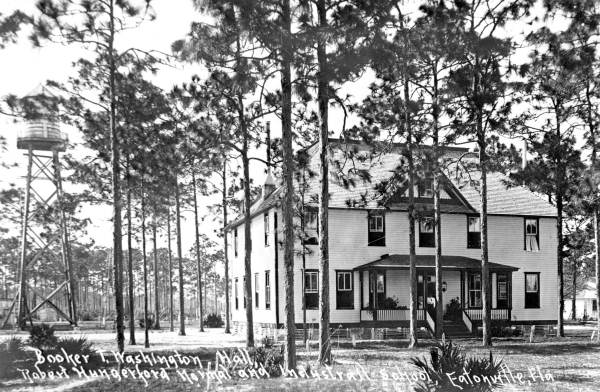
When real estate is in the news, it is often that same old tale of “Big Developer Continues with Plan to Upset Surrounding Community, Surprising No One.” When the party with deeper pockets always comes out on top, these situations can feel satirical, as if LARPing a democracy where cash is king. That is what makes a recent story, centered on a historic land trust site in Eatonville, FL, so refreshing – when a developer took notice of community intentions and stepped down. Regardless of whether the move was motivated financially, by potential legal exposure, or a true reaction to community concerns, it proves that even real estate is subject to that universal maxim: Just because you can doesn’t mean you should.
Eatonville, FL as a Civil Rights Center
Eatonville is the hometown of author Zora Neale Hurston, whose works were central to the Harlem Renaissance in the early 1900s. Hurston described her hometown as “the oldest incorporated African-American municipality in the United States.” The town has embraced its identity as a historic Black community, spearheaded by the efforts of the Association to Preserve the Eatonville Community, Inc. (PEC).
It was the PEC that called for help from the Southern Poverty Law Center (SPLC) when the Robert Hungerford High School property in Eatonville was teed up for sale to a private real estate developer for “mixed used development.” While this kind of residential/commercial land use doesn’t typically pose an inherent problem, it did for Eatonville residents. Why?
The Hungerford Trust
Because that property has a significant history to it. Before it was a high school, it was home to the Hungerford School, the first school for Black children in Central Florida, established in 1897. The Hungerford family donated 160 acres of the land for the founding of the school, garnering its name.
The school and the property formed part of a charitable trust, for which a handful of trustees and their successors were to ensure the land’s continued use in that vein: a place of education for Black children. The significance of that grant cannot be overstated during a time when most public schools refused education to the Black community.
The history of the Hungerford property is fraught with disputes. In 1951, a straightforward conveyance of the trust was interrupted when the School Board of Orange County, FL acquired approximately 300 acres which included the Hungerford property and school. That acquisition was contested by one of the original Hungerford heirs.
The dispute made it to the Florida Supreme Court, where the cy pres doctrine was invoked to resolve the dispute. “Cy pres” means “as near as possible,” and is used by courts to determine how charitable gifts are distributed when the original conditions are no longer possible. The result was that the Orange County School Board took title to the Hungerford property, but with a deed restriction mirroring the original intention of the charitable trust:
“That upon the conveyance of said real property to the Board of Public Instruction of Orange County, Florida, said real property be used as a site for the operation of a public school thereon for negroes with emphasis on the vocational education of [N]egroes and to be known as “Robert Hungerford Industrial School” and the personal property as conveyed to said Board shall be used in connection therewith.”
From 2011 to present, the School Board and The Hungerford Chapel Trustees have worked back and forth on deals to release the land from those deed restrictions and put it to another use.
There’s significant depth to these negotiations, including the demolition of the Hungerford High School buildings in 2020 – with contracts inside and outside of judicial review – which is glossed over for our purposes. If you’re interested in the play-by-play, you can’t do better than SPLC’s detailed written complaint.
Our abridged version is that the Hungerford Chapel Trustees and School Board worked to open the land to commercial use, asserting that Eatonville would benefit more from productive use of the land. Citizens of Eatonville were not in agreement over what the property should be used for. The School Board and Hungerford Chapel Trustees finally achieved release from the educational land use restriction in 2022, to the chagrin of much of the Eatonville community.
Preserving Eatonville
Then in December 2021, the School Board entered into a sales contract for 100 acres of the property with Falcone & Associates. The developer laid out their plan to the city, including residential parcels mixed with business and office properties.
But the School Board found themselves continually extending the closing date of the sale, because the developer had not been granted land use entitlements by the city. Eatonville was holding out. The city requires at least 5% of the land to be used for public purposes according to their 2018 Comprehensive Plan. The developer tried to change the zoning and the Comprehensive Plan to fit their purposes, but Eatonville voted it down.
PEC + SPLC
It was around this time that PEC came to SPLC, who began representing PEC. PEC viewed the Hungerford property as essential to Eatonville’s renaissance. The property is a large part of the town – 14% of Eatonville – and PEC wanted to see its continued civic use. In their words, the private development of the Hungerford Property “threatens to erase a living, thriving historical Black community.”
Their detailed concerns included:
- Increased intensity and density of the land usage
- Decreased affordable housing
- More traffic, without a plan to accommodate greater infrastructure needs
- Inattention to the historical and cultural preservation of Eatonville
SPLC filed their complaint on behalf of PEC in March 2023, asserting that the School Board had no right to wrest the property from public education usage, citing Florida Statute sec. 1013.28(1)(a), requiring a school board to take “diligent measures” to make these kinds of changes, and only if they’re in the “best interests of the public.”
Had the Orange County School Board really shown that making the Hungerford property open to private sale was in Eatonville’s best interest?
SPLC assertedthey had not, noting the lack of research into how the city and its residents would receive benefits from maximizing private profits on the Hungerford property. SPLC argued that, even if the School Board no longer needed the Hungerford Property for its school system, all school lands should be held in trust “for the benefit of the community,” and:
“…there are numerous analogous or ancillary purposes to which the land could be dedicated that would promote the original purpose of the charitable trust and comply with School Board duties… For example, dedicating portions of the land for a museum or civic space for purposes of hosting educational events would continue the charitable purpose of education in a way that furthers the intent of the original trust, protects the best interests of the public, and complies with the School Board’s duties under law and under the 1951 deed restriction/restrictive covenant.”
Residents of Eatonville echoed those same questions at community meetings: Why isn’t this land being used to promote education or benefit the kids of our community in new ways?
The Community Is Heard
By the end of March 2023, the developer chose to cancel the sales contract on the Hungerford property rather than continue with their plan for the historic site. With the first battle won, PEC are now putting pressure on the Orange County School Board to return the Hungerford property to a public trust. It remains to be seen if the School Board is as willing to listen as the developer – but they will have to look long and hard for a justification to privatize the Hungerford property and divorce its legacy from the Eatonville community.
*
Who Owns the Air Rights in Sarasota?
To real estate outsiders, the concept of air rights often comes as an almost whimsical surprise. “You can own the sky above a building? I didn’t even know that was a thing!” But for the initiated, it is well understood that the air above a building can greatly affect square footage price. We see it happen hyperbolically in markets like Manhattan. Closer to home – and the focus of this post – are developers in Florida debating: Who owns the air rights in Sarasota?
The Quay
Let’s set the scene: EXT. DAY. Downtown Sarasota, FL. Waterfront property. 14 acres. Demolished in 2007. Being seriously redeveloped for residential and commercial use by GREENPOINTE HOLDINGS and SUB-DEVELOPERS since 2018.
Act 1. The conflict is introduced.
Clashing opinions have arisen among the developers operating within the bounds of Greenpointe Holdings’s property, The Quay. The land has been divided into parcels so that different builders can construct their vision, be that luxury condos, a restaurant row, or office towers.
The Air Above Quay Commons
It’s clear where the property lines fall on the actual surface area of the land. But a dispute has emerged over a small road within The Quay called Quay Commons – more specifically, regarding the air above that road. One Park Sarasota wants to build an enclosed tunnel above the road between and connecting two of its buildings. Greenpointe Holdings is ready to sell.
But the board of another condo developer, Ritz-Carlton Residences (owned by Marriott International), asserts that Quay Commons belongs to all the buyers in The Quay – it’s a road owned in common. By their logic, Greenpointe Holdings cannot simply sell the road to One Park. All of the buyers in The Quay must agree.
Naturally, One Park doesn’t appreciate the potential pause of its construction plans. They have already sold over half of the six penthouses in their proposed project, with penthouses priced around $13 million. But if the dispute isn’t resolved in a timely manner, the city won’t approve their building permit. They would surely feel the dent of losing those condo deposits if construction moves too slowly.
The Ritz-Carlton Residences already exist in The Quay as an 18-story condominium tower. All the units in that tower are sold and inhabited; future ownership changes passed on to the vicissitudes of the Sarasota market. Their condo board seems concerned with the views down Quay Commons for their residents – namely, they don’t want a big glass tunnel in the way.
Adding to that, they cite One Park’s early renderings as the foundation of their expectations which show two separate buildings and conspicuously lack any mid-air tunnel connecting them over the road.
Dispute Territory
Act 2. Conflict comes to a head.
One Park’s NY and Sarasota development partners filed a lawsuit against the Block 5 Condominium Association for the Ritz-Carlton Residences. It also names several companies associated with other buyers of The Quay. One Park is hoping for a quick judgment so their project application with the city can continue.
Not surprisingly, the opposing sides come to very different conclusions on how this may play out. One managing partner at PMG predicted the case wouldn’t last 90 days, citing their legal counsel’s belief that the case won’t need discovery.
On the other side, one attorney for the condo board predicts resolution won’t happen for at least six months(which would definitely interfere with One Park’s construction timeline).
Act 3. Resolution (pending due to writer’s strike).
It remains to be seen if heels are dug in – or if construction plans are re-worked to confine the buildings to their undisputed private air space sitting directly on top of their property. But it should be evident by the number of developers, boards, partners, associations, and investors involved that these air rights can be a significant source of value that people can and will fight over.
It’s All About What’s Out Your Window
Air rights often come down to these two features of value: utility and aesthetics. Builders want the opportunity to build up and make spaces more dense so they can sell and rent more apartments, condos, or offices. So, air rights in a place where tall buildings are allowed? That’s some valuable sky.
But they also want to increase the price of their space by providing future buyers or renters with coveted “views” of the surrounding area. That inverse relationship is part of the tension with air rights, because the highest value is when you use your air rights while no one around you uses theirs. It can become an unspoken detente where property owners don’t build further vertically in fear of creating a race to the sky where everyone loses. That fear is not unreasonable as a simple internet search for “spite houses” or “spite buildings” shows the dangers of mixing money and pettiness.
As frivolous as this may sound, you have probably evaluated a potential living space based on what you could see from a window. Is it a sparkling, blue bay? An elevated train track? The bricks of your neighbor’s wall? For many people, that view from the kitchen, bedroom, or living room affects how they feel day-to-day.And this comprises a touchstone of real estate in general. Part of the value of a place is ineffable. It’s how a place makes a person feel. Real estate law attempts to codify that ineffability with concepts like air rights which speak to both utility and aesthetics. While much of the law developed through disputes is driven by economics, there is a significant history of disputes solely regarding the views obtainable from a property and the feelings they generated in the owners. As immortalized in the 2002 science fiction epic Firefly’s theme song, “Take my love, take my land, take me where I cannot stand. I don’t care, I’m still free, you can’t take the sky from me.” So, perhaps there is a tinge of whimsy to it after all.
 Angela Gets Creative
Leave a comment