Featured in a Winter 2022 edition of MS Focus Magazine!
Designing Home Modifications for Multiple Sclerosis
The reality of MS is that it’s rarely fatal, but there also currently exists no definitive cure, only treatments. So if you’re diagnosed, you’re likely going to live with MS — and the disruptive and unpredictable way it affects your nervous system — for a long time.
While some recommendations to cope with MS focus on extensive changes in diet, exercise, and treatment, our contribution addresses a different dimension of coping: modify your living space.
Why Home Modifications?
One thing that we tend to cherish as individuals is living with independence. Yet many of the symptoms of MS make this difficult. Our home modification strategy is all about helping you maintain the highest quality of life through design.
Designing your space with intention will help you manage and ameliorate the issues of MS while bolstering quality of life. This means reconsidering architecture, engaging in renovation for accessibility, and utilizing assistive products — especially assistive technology. Small actions add up, especially when your home is a place for work, therapy, and rest
Home modifications and assistive products strengthen quality of life on two fronts: alleviating the challenges of specific symptoms and meeting individual needs. Based on a blend of these objectives, we group home design modifications according to the following considerations:
- Safety and Accessibility
- Energy Conservation
- Pain Management
- Cognitive health, stress relief, and mental health
Safety and Accessibility
Some common symptoms MS increase a person’s everyday accident risk. Consider how these health issues would make someone more likely to experience mobility challenges and injure themselves — especially in a fall:
- Vision changes
- Altered sense of balance
- Weakness
- Numbness
For this reason, safety needs to be the first priority in home modifications for MS. At the top of the safety pyramid: fall prevention.
The first order of business is to eliminate tripping hazards in the home. Many of us step across raised thresholds all the time without considering how tricky this could be for someone with gait, balance, or vision problems.
Minimize this risk by smoothing out passageways. This could involve matching varied floor heights, adding gradual ramps instead of stark thresholds between rooms, or remodeling a bathroom with a zero-barrier shower.
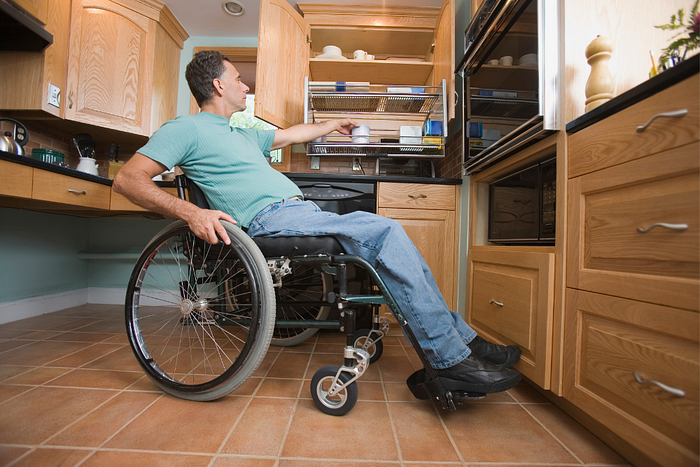
Redesigning can also place the most-often-used appliances, storage, and household items in the “easy reach” zone. This might be as simple as repositioning shelves or as extensive as changing countertop heights.
The bathroom needs special attention in this regard. With slick surfaces and the obvious water element, it’s a high fall-risk area. Bathroom redesigns may incorporate grab bars, a higher toilet, and open design concepts that minimize opportunities to trip or slip.
You’ll want to accommodate equipment that supports safe movement in the space, too. This generally means widening doorways and hallways.
During the redesign process, take a close look at the pathways of the home. Where does the person with MS travel on a daily basis? What sort of turning radius will they need now and in the coming years for a walker or a wheelchair? Does the existing home build call for larger modifications, like a ramp, stair lift, or elevator?
Energy Conservation
Ask anyone with MS, and they’ll tell you that fatigue is one of the most persistent symptoms. When your energy is limited, you want to expend it on what matters most.
For this reason, the majority of design plans for MS need to support energy conservation.
Centralize and Condense
Create “activity centers” around the house based on your consistent needs. For instance, you could have a “kitchen center” arranged for easy coffee/tea and simple meal preparation. Want to get really fancy? Add a nearby bluetooth speaker for morning news, music, or podcasts — and to control smart appliances, like a touch-activated sink faucet. Stove, sink, fridge, and cabinets or shelves containing essentials can also be installed near each other, lessening the need to traverse the kitchen.
Near the kitchen, you could plan an adjacent home office station: desk with comfortable chair, phone or tablet stand, and built-in shelves for your pens, stickies, and organizers.
You can see how a similar approach would work by clustering clothes and get-ready items in the bedroom or toiletries in the bathroom. In short, try to create “triangles of ease” throughout the house.
Make Small Tasks Easier
Simple changes can reduce strain and cumulative fatigue. Switch out fixtures for universal design options that require less dexterity and effort: levers for knobs, wide-grip handles, and toggle light switches instead of traditional ones. And you can employ smart home automation to control lighting, climate, and entertainment in your daily life.
Pain Management
People with MS often deal with muscle spasticity and nerve-related pains — they may come and go, but they never really stop. The person with MS also might deal with secondary pain from muscle stiffness and temperature sensitivity.
Certain home modifications reinforce tools for pain management. For example, an easy-access bathtub allows for a nice, cool soak to combat nerve pain. Induction stoves use magnetism instead of flames, keeping kitchen temperatures down and lessening heat discomfort.
Don’t underestimate the simple value of a calming space for pain management, either. Home modifications can include soothing materials, colors, and architectural points, like a skylight.
Cognitive Help, Stress Relief, & Mental Health
Many progressions of MS involve cognitive challenges with attention, processing, or even depression. Stress also increases MS flare-ups, so you want to break the stress cycle wherever possible.
Biophilic design brings the outdoors into the living space and, with it, the well-studied mental health benefits of nature. This could encompass small green touches, like a potted house plant — or larger changes, like a bay window with built-in seating. You might even consider the addition of an indoor garden with tall planters to alleviate stooping.
Spaces for peace. Through home modification, you can redesign an existing space or add a new room to cultivate a sense of comfort and well-being. You can also interweave natural elements in home renovation materials: stone, wood, and raw textiles.
Spaces for therapy, exercise, and rehabilitation. It’s a real catch-22 — staying active makes for a positive MS prognosis, but the fatigue and muscular symptoms of MS may make you only want to veg on the couch.
We return to the concept of “activity centers” to conserve energy — and encourage exercise within reach. Create a nook set up for wellness activities that will help you in the long-run. Then you can avoid the trouble of rolling out a yoga mat or getting your weights out of the closet each time.
Lighting. The ability to manipulate light in the environment also has an effect on mood and mental clarity. Bright, full-spectrum light can help combat depression. On the other hand, you might employ black-out curtains or automated blinds in your bedroom to regulate sleep cycles.
Don’t Overlook the Caregivers in Home Design
Caregivers are often an essential part of the life with MS — if not daily, then on some sort of regular basis. We recommend creating a space for the caregivers as part of a holistic design approach.
You could add a separate wing for the caregiver — or simply redesign existing spaces to incorporate rest nooks throughout the house.
Whether that’s a family member, friend, or a working assistant, when they have the space to recharge, both the caregiver and the individual with MS will feel the benefits.
Hope in Home Design
People with MS can significantly increase their quality of life by employing thoughtful design that accounts for their individual needs. At Live in Place Designs, we are CAPS-certified designers with healthcare expertise who can help transform your home into the space you need.
*
The Ultimate Guide to Assistive Technology for the Elderly
At Live in Place Designs, we believe that aging gracefully with independence can be achieved through good home design. For this article, we’d like to focus on a particularly easy-to-implement element of aging in place: assistive technology for the elderly.
Assistive or adaptive technology for aging is exactly what it sounds like: electronic or digital products that help solve aging challenges. In our case, we prize the many applications of assistive technology for the elderly who choose to live at home, either on their own or with caretakers. Technology solutions can be implemented during an aging in place remodel for a bathroom, or on its own to improve the home.
We know that the word “technology” can sound intimidating to older people, but we’re really living in a golden age of user-friendly assistive technology. Smartphones alone have made a huge dent in previous home safety and security concerns.
Basically, keep an open mind in regards to what your aging loved one can handle. The gadgets, apps, and assistive devices for seniors at home can be surprisingly easy to use.
Consult this guide to learn how assistive technology can enable your loved ones to live at home with independence and peace of mind. Look through the titles to find the specific challenges they seem to be dealing with — and what solutions can help.
Daily Organization and Routine
For many aging people, memory loss and confusion can pose an issue.
This could encompass natural forgetfulness as well as a slower ability to learn. Plus, your loved ones are likely to experience big life changes as they age that might throw off their sense of routine — like retirement.
Sometimes, the forgetting and disorientation are more severe, as in the case of those with dementia or Alzheimer’s (a particular, degenerative form of dementia). Assistive technology that helps structure time and activities will especially come in handy for these conditions.
Reminders
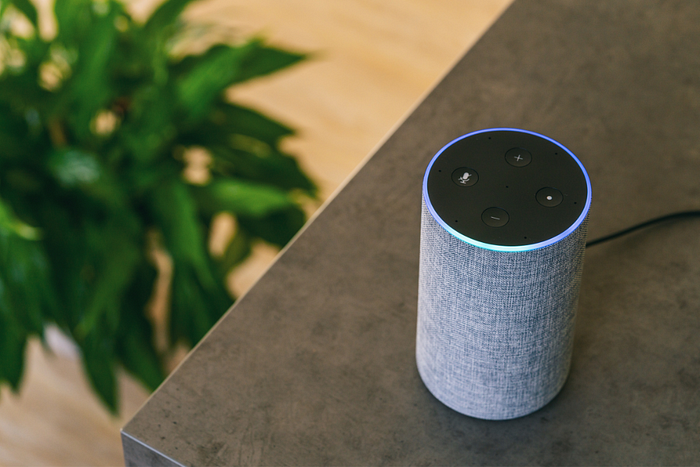
All sorts of daily prompts can be built into smartphones and household smart devices, like an Amazon Alexa. Specific assistive tools can also address specific reminder needs.
Memory aids
Digital calendars change on their own, offering the observer date, time, and weather information each day.
Medication Reminders
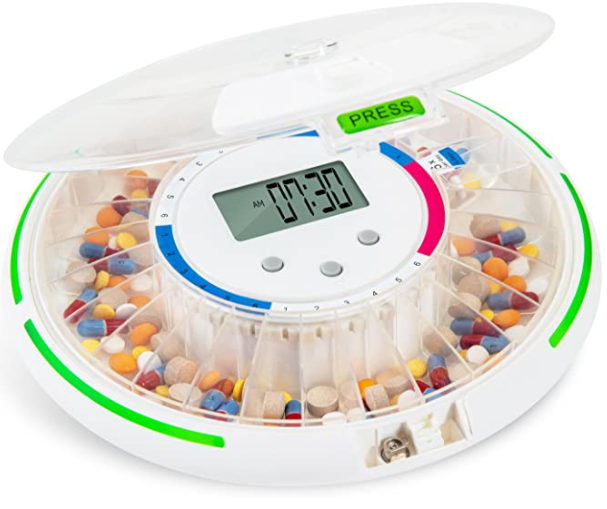
Automatic pill dispensers control the dosage and time of medication ingestion. This can be effective in two important ways: increasing consistency and preventing dangerous overdose.

The smartphone app Pillboxie allows you to easily set up visual daily prompts so your loved one can check off medications once they’ve taken them.
To-Do Assistive Technology
Item Locators
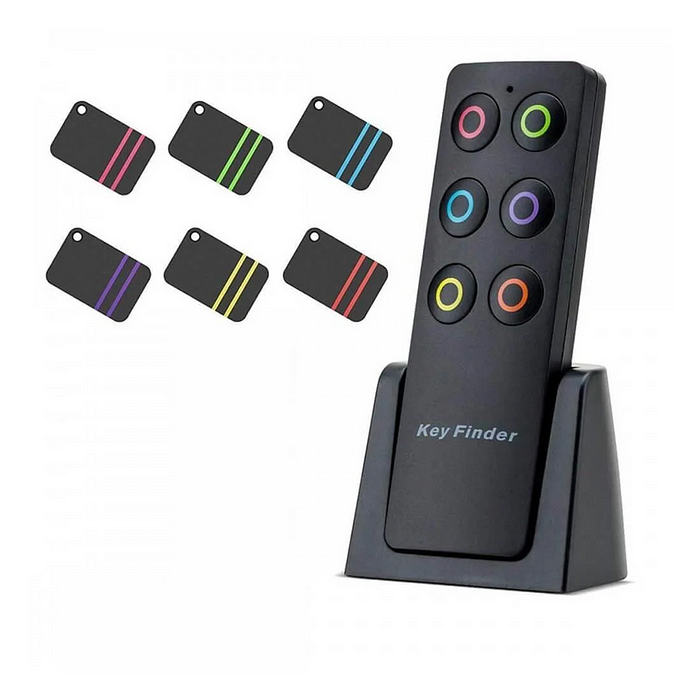
It’s easy for anyone of any age to lose their keys, phone, wallet, or purse. If someone’s short-term memory is suffering, it’s even more likely. Locating devices help solve this.
This technology often consists of small, adhesive tabs with an audio cue (beep!) and a central remote. Stick the locators on any small items that could be absent-mindedly misplaced.
Voice Recordings
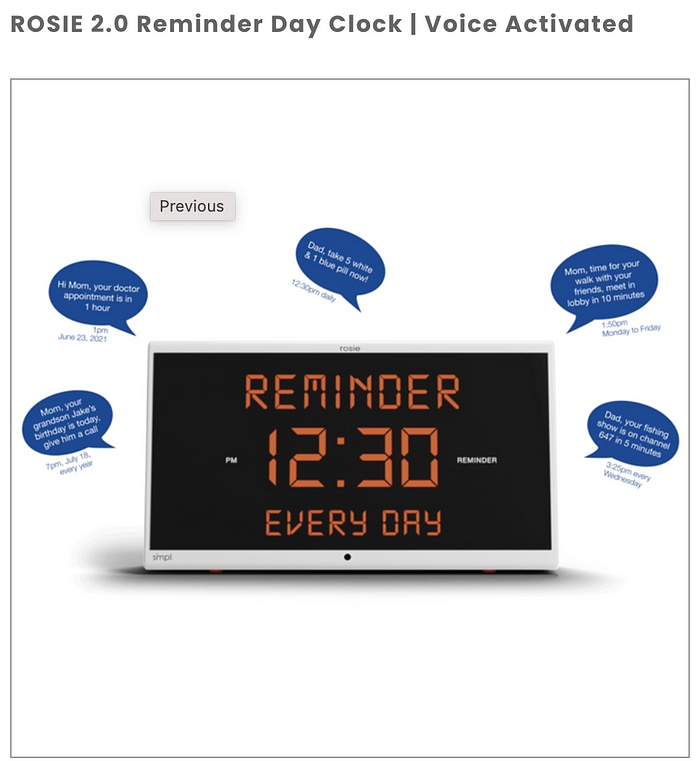
This smart technology-enabled aid is particularly amazing. You can program recorded steps for activities in connection with reminders or prompts.
For instance, you could program an alarm to go off at 10 AM that says “Time to get dressed. Pull the handle of the top drawer in your dresser. Take out one shirt, pants, and socks….”
You’ve probably already guessed that a smart assistant, like an Alexa or Echo, could also serve this purpose.
Monitoring Technology
For this particular type of assistive technology for the elderly, you’ll want to consider your loved one’s level of comfort with surveillance. Some people are bothered by what feels like an invasion of privacy, but it’s important to balance this with the fact that surveillance technology can greatly increase safety.
Personal Safety
Telecare systems
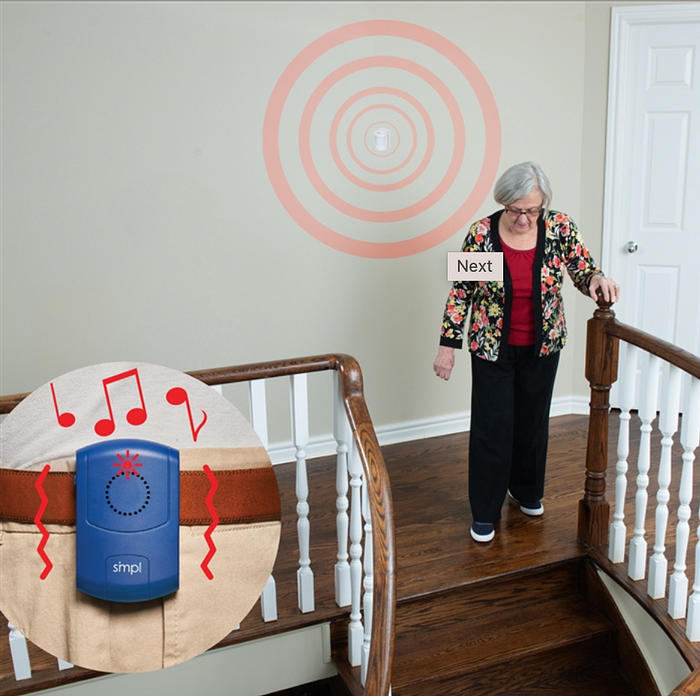
These monitoring systems can detect when something seems amiss in the environment. They send alerts if they sense changes from ordinary events, such as:
- Changes of routine (i.e. not getting out of bed at the usual time)
- Impact with the floor — these are specific fall detectors
- Unlocked or open doors
These systems can also include personal alarms that your loved one wears. Emergency services and contacts can be alerted at the touch of a button.
GPS trackers
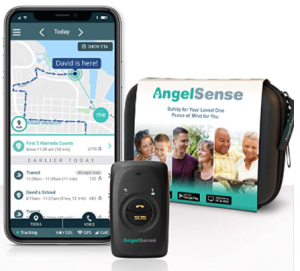
These trackers can be lifesavers for those living with dementia or Alzheimer’s who tend to wander away from home and forget how to return.
They can come in more obvious forms, like a wristband, but there are also handy “hidden” versions in shoe insoles. This helps offset the tendencies of people with dementia or Alzheimer’s to remove helpful devices.
You can also install this kind of device in a car for those in the early stages of dementia or Alzheimer’s.
Water temperature monitors

You can install these on bathroom or kitchen faucets.
People with dementia or Alzheimer’s are especially sensitive to water temperature, and they may accidentally set it too high without realizing. A monitor can prevent discomfort as well as serious burns.
Home Safety
Appliance monitors.
In the same vein, monitors for different appliances can send alerts when the fridge door is left open, reminders that the stove/oven is on, and even shut off an electrical or gas appliance automatically if they detect smoke.
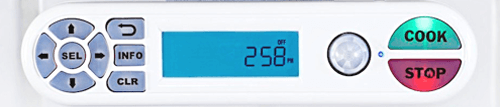
Below are some examples of this type of assistive technology:
Complex motion sensing/monitoring technology with web-based monitoring.
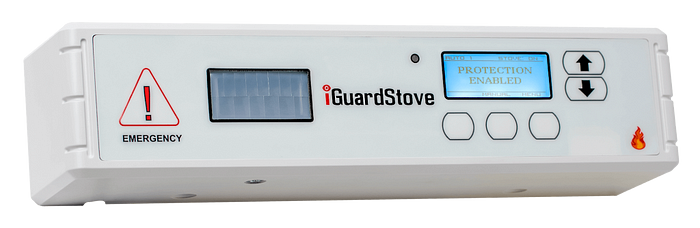
Home Senser (yes, that’s how it’s spelled) –
Works by sensing both the state of the stove controls and if a person is attending the stove while it is turned on.
Cookstop –
Computer-controlled motion sensor technology to monitor a presence in the kitchen.
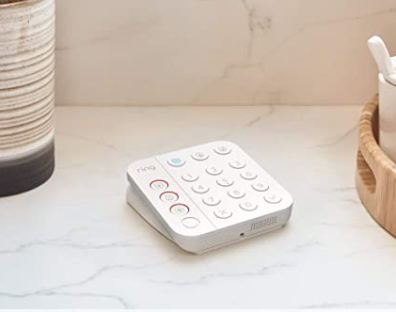
General home security alarm systems
Home security systems need not be complex or alarming. You can have a Ring doorbell installed for your loved one with ease. This will alert them of anybody who approaches their threshold, and they can check it for a voice and/or video preview of the guest as well.
As awful as it seems that somebody could take advantage of an elderly person, especially one with memory loss, it does happen. Because of that, this is an important addition for most aging people who live alone. Sometimes the mere presence of a visible alarm system is enough to deter unsavory folks.
Check In with Individual Needs
The most important consideration when adding assistive technology for an elderly person in their home: in what areas do they actually need or want help?
When you’re busy raising kids and working, it feels incredibly convenient to have a box of groceries delivered. But for your retired loved one, that may eliminate their chance to see people at the store or go shopping with a friend or helper.
Assistive technology used with sensitivity balances the physical, social, domestic, and comfort needs of the individual.
At Live in Places Designs, we’re CAPS certified to help you navigate these decisions to suit your loved one’s needs and lifestyle.
*
Your Guide to Best Home Modifications for Autism and Sensory Processing Disorder
If you or a loved one live with autism spectrum disorder (ASD) or sensory processing disorder (SPD), you know the daily challenges that arise from sensory overload. Thoughtful home modifications for autism spectrum disorder can help soften the impact of hypersensitivities related to these conditions.
Although ASD and SPD are not the same condition, their needs often overlap. People with both can experience overwhelm from their environment: sights, sounds, textures, smells, and even tastes. Partly due to these elements, on top of other different cognitive processes, both may struggle to assimilate social information.
The pressure of environmental and social inputs can lead to destabilization — a high, interfering amount of anxiety and stress. While stressors are not always negotiable in the world, the home environment presents an opportunity to bring balance to residents with ASD or SPD.
8 Key Home Modifications for Autism Spectrum Disorder
Sensory Balancing
This is the goal of home design for people with ASD or SPD.
Sensory balancing generally entails:
- Fostering routine
- Minimizing anxiety
- Maximizing independence
When considering home modifications for autism spectrum disorder or sensory processing disorder, we can’t stress enough the importance of the individual.
At Live in Place Designs, we start by interviewing the resident with the condition and/or their caretakers.
We want to tailor our design to these questions:
- What are the person’s triggers and anxieties?
- What works for them?
- What helps calm them?
- What helps to stimulate them?
- What have you learned over time about their routine preferences
With these answers, we embark on specialized changes to make the home feel like a “safe haven” for the person with SPD or ASD — a place to shelter and recharge from the unpredictable stressors of the external world. Creating a room that provides optimal sensory environment is desired.
Though each design process focuses on the individual, we can make certain general recommendations to consider when revamping your home to accommodate ASD or SPD.
Lighting
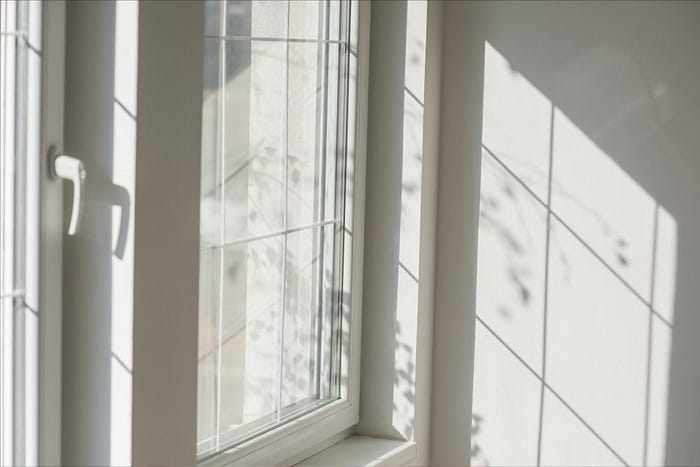
Too much or too little lighting — either can stress a person with ASD for different reasons.
Bright, harsh, direct light may actually overwhelm their visual sense. On the other hand, poorly-lit areas can evoke anxiety of the unknown.
For nighttime, consider motion-detector, recessed lighting under the bed. If he or she wakes up in the middle of the night, a warm glow will illuminate their surroundings and help them feel safe.
Employ outdoor lamps, as well, if darkened windows contribute to anxiety.
Keep in mind that fluorescent bulbs actually flicker and emit a low humming frequency. This can irritate people with ASD or SPD, even if their caretakers don’t perceive it.
Incorporating windows and natural daylight wherever possible can help solve both problems. Easy-to-maneuver blinds or shades allow the resident with ASD to control the intensity of light in their space.
These home modifications also lets them control their exposure to peering eyes, which touches on another important point for many folks with this condition: privacy.
Surveillance
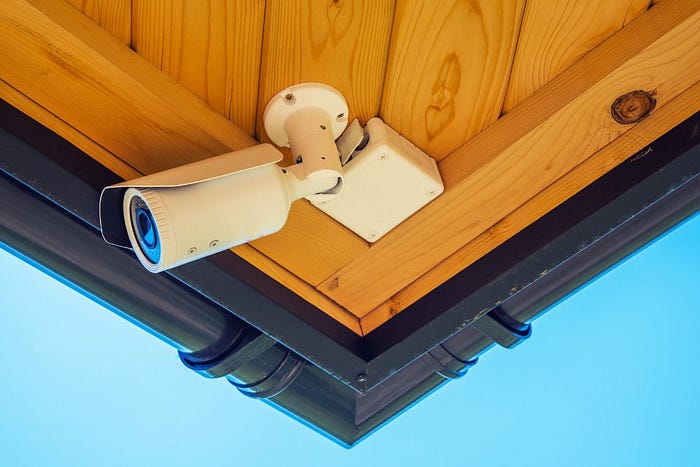
For someone with ASD or SPD, unexpected social encounters can really stress them out. Maintaining privacy is paramount.
These days, many surveillance technologies exist to alleviate intrusions. You can install a doorbell monitoring system for the person with ASD to survey visitors. This will provide context and some anticipatory time for cognitive processing before they interact with a stranger.
If you need to bring in auxiliary caregivers, cameras at key locations create a two-way street of security: the resident with ASD can check out what’s happening in their domicile, and you can check on the secondary caretaker when you’re gone. This can provide peace of mind on many fronts. Just keep in mind that with surveillance comes legal concerns of those being recorded. You may want to consult with a trusted legal representative before installing and using cameras or monitoring systems in your home.
Related to camera technology, tablet video portals can also bestow comfort. This especially helps anxious nighttime wake-ups, when your loved one with ASD might seek you out. Instead of interrupting everyone’s sleep schedule, you can check in through the tablet without leaving bed.
You’ll want to install these systems during other renovations and home modifications for autism spectrum disorder or SPD, since you’ll need to route wiring through walls and floors. Plan ahead!
Create Territories to Ease Anxiety
While some of us can flow between work, play, and sleep in the same room, people with ASD or SPD benefit from spatial cues to transition into new activities.
Remember, surprises are anathema for many folks with these conditions. Establishing the opposite — routine — greatly improves their wellbeing. To help create a sense of organization and expectation, researchers recommend breaking the space into “pods”, or areas with specific functions.
You might demarcate separate rooms or sections for therapy, recreation, and winding down. Decorate and furnish these in contrasting ways. And don’t hesitate to tailor them to your loved one’s needs.
For instance, in a recreation room, you might set up a game system that’s easy to initiate with little assistance. Connect the TV to a touchscreen remote with large, visual buttons. This adds to the much-needed sense of environmental control.
Therapy rooms are a particularly important pod. Many people with ASD participate in Applied Behavior Analysis (ABA) therapy or Cognitive Behavioral therapy (CBT) with a specialist. This can demand a lot of energy and focus.
Foster a nurturing therapy environment to encourage their success:
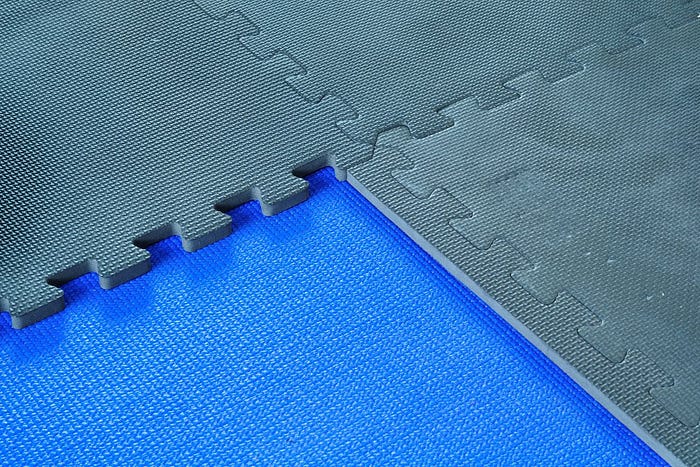
- Soft flooring — look into gym mats
- A variety of seating options, such as cubes, rockers or bean bag chairs
- Windows and doors that allow for privacy
For younger residents with ASD or SPD, you might also create a space for bonding time with a parent. While some kids bounce between cuddles and play time with ease, youngsters with ASD may need more structure to be soothed. We like to install a hammock for parents to rock their young ones.
Color Therapy
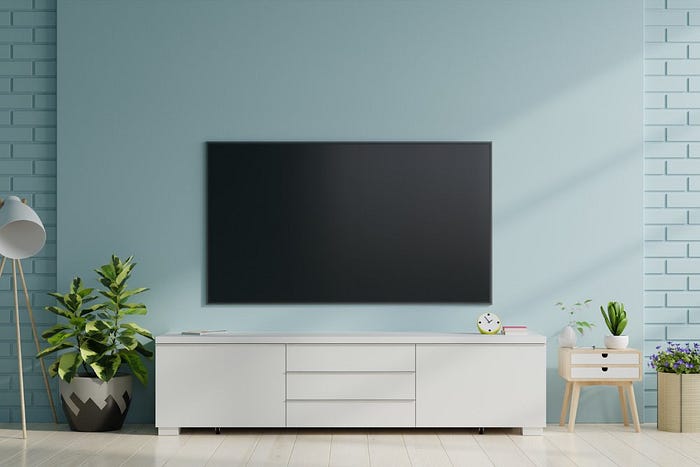
Generally, we recommend calming, natural colors: blues, greens, and neutrals. Reds and oranges have been known to cause some visual aggravation for people with ASD or SPD.
However, we want to emphasize personalization again. Ask: what colors do you like? What colors make you feel peaceful? Energetic?
Some of our clients with ASD have made surprising color choices. But we went with it, because those colors worked for them.
Consider the functions of the space, too. If you’re breaking a large room into different pods with dividers and furniture, you might change the color schemes of the areas: subtly bright colors where they exercise, soothing colors in the calm-cave, and so on. Follow the pod themes.
Noise Reduction
Many folks with ASD or SPD have auditory sensitivities, too. Seemingly moderate noises to those of us without these conditions can be quite upsetting to them.
It might not be feasible to treat all the walls of your home, but you can insulate certain rooms to make them “extra-quiet” havens. Consider double-paned windows, as well.
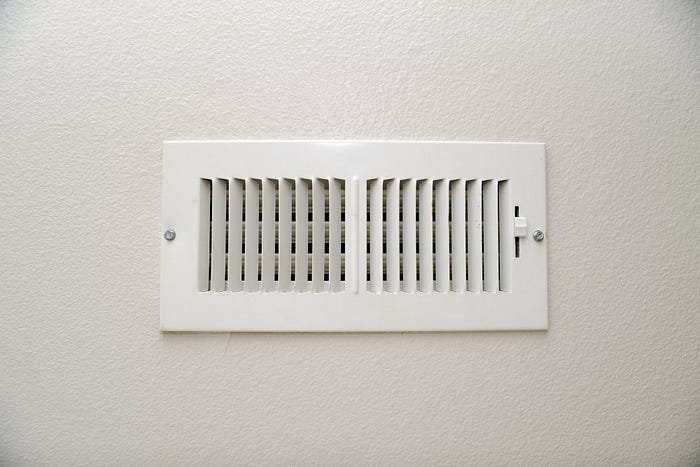
Sometimes it’s helpful to do a home walk-through and monitor or interview the person regarding noises. You’d be surprised at what stands out: bathroom vents, faucets, fans, floor echoes… Wherever you can, swap out appliances or materials to reduce noise.
Care for the Caregivers
Last but not least, we always like to throw some spotlight on the caregivers. You want to design your space to support your loved one with ASD or SPD — and their caregiver.
Of course, this is partially about gratitude and appreciation, but it’s also practical. Taking care of someone else is hard work. Caregivers need to restore their energy regularly. If not, they risk burn-out.
This can lead to high turn-over rates in hired caregivers or lapses of attention and judgment in primary caregivers. Both lessen stability in the autistic or SPD resident’s life. So, design with the caregiver in mind.
They will need a space to rest sometimes. It can be helpful to create a room, a safe space, where the person with ASD can do something fun while the caregiver takes a break. Create a kitchenette and dining area for them to enjoy a meal in peace, or to have some privacy while on break. Stock mini fridges in often-used rooms so that they don’t have to leave their charge to stay hydrated or grab a snack.
Home Modifications for Physical Capacities of ASD
Some folks with ASD experience challenges with physical balance. This can encompass proprioception (awareness of the body in space) and vestibular sense (balance as related to the inner ear), as well as anxiety that affects how one moves in space. It’s a complex interaction, so much so that movement difficulties are not required for a diagnosis of ASD.
Fortunately, the solutions for this are standard to many accommodation renovations. We focus on minimizing trip hazards and adding support where necessary:
- Lowering or eliminating doorway thresholds
- Installing a zero-entry shower
- Designing easy-to-maneuver stairways
- Installing grab bars where appropriate, according to house structure and daily routine
Help with Home Modifications for Autism Spectrum Disorder
We understand that the emotions of a family dealing with ASD or SPD can run high. However, as you can see, many challenges of ASD and SPD can be mitigated or surmounted with good design.
We’re here to help create the most restorative and supportive home environment for you and your loved ones. Reach out today for a consultation.
*
Living with Multiple Sclerosis — Quick Fixes and Long-Term Home Modifications
Multiple sclerosis is a chronic autoimmune disorder that affects the nervous system in a disruptive and unpredictable way. Generally, it develops as either progressive or relapsing. That means MS will generally appear in either an intermittent cycle of symptoms and remission or a steady, gradual progression of symptoms.
The damage to central nervous systems (CNS) communication causes a range of neurological symptoms, which can worsen or ameliorate spontaneously, including:
- Fatigue
- Muscle weakness
- Vision problems
- Cognitive and mood changes
Domestic Needs of MS
People living with MS need a home environment that helps them move with ease and conserve energy. This addresses common symptoms in several ways.
For instance, a person with MS may experience muscle spasticity that makes fine motor movement difficult, like grasping a doorknob or flicking a light switch. Balance issues and muscle weakness may increase fall risk. Suddenly, a cluttered living space, steep stairs, and a boxed-in shower feel like major daily obstacles.
Even if energy levels vary from high to low on a given day, fatigue is a persistent symptom of MS. Homes with complicated architecture, entrances, lay-outs, appliances, and features stand out after diagnosis. Something tolerable before, like a window that sticks, can become a hindrance to physical comfort and independence. In this example, a sticking window would actually hit three symptoms: muscle weakness, general fatigue, and temperature sensitivity.
You should have efficient options ready for when fatigue peaks, since it is the most common symptom. We’ll go into how to make everyday tasks in the bedroom, bathroom, and kitchen simpler, less time-consuming, and less physically taxing.
Because of common motor and vision difficulties, people with MS also need open space to move at home. This starts with decluttering from the floor up. Clear paths make way for trip-free unassisted walking or assistive devices like walkers or wheelchairs.
And let’s not overlook the pain management and emotional regulation needs of people with MS. You might create an MS-friendly office, so you can continue at your current job but work from home. You’ll also want to incorporate colors, styles, and aesthetics that calm or lift your spirits.
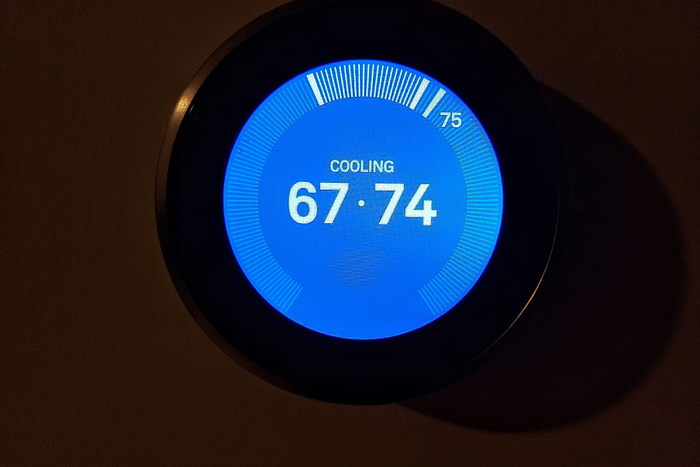
Pain management may also involve therapeutic uses of heat to address muscle stiffness and temperature sensitivity in winter months. Or, the opposite during warmer months — ways to stay cool. This can call for specific products or designs to facilitate that, like a smart home voice-controlled thermostat.
You might even need help from a caretaker, family member, or friend. We can show you how to make their job easier and create a nurturing space for them in your home, too.
How to Approach Home Modifications for Multiple Sclerosis
Our first recommendation is to take these changes gradually, especially if you feel overwhelmed with a diagnosis. Because MS’s development differs from person to person, you have some time to determine the home modification course that you need.
Plan for the future, but know that taking action on simple changes can make a big difference now.
Home Changes for Multiple Sclerosis: Quick Fixes
Right away, you can implement some simple MS modifications to make everyday life a little smoother.
Change to Universal Design Fixtures
Easy universal design fixture swaps don’t shout “accessibility”, but the household member living with MS will appreciate the ease of use:
- Change light switches from the traditional shape to toggle switches.
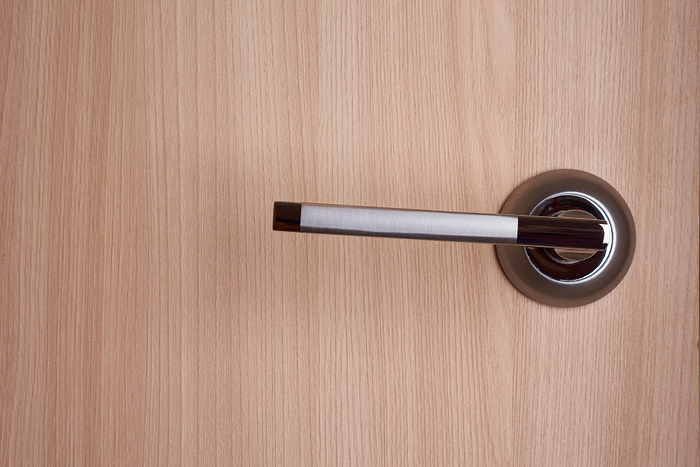
- Switch out tough-to-grasp door knobs for door levers, which are easier to manipulate without fine grasp.
- Install touch or automated lights and faucets.
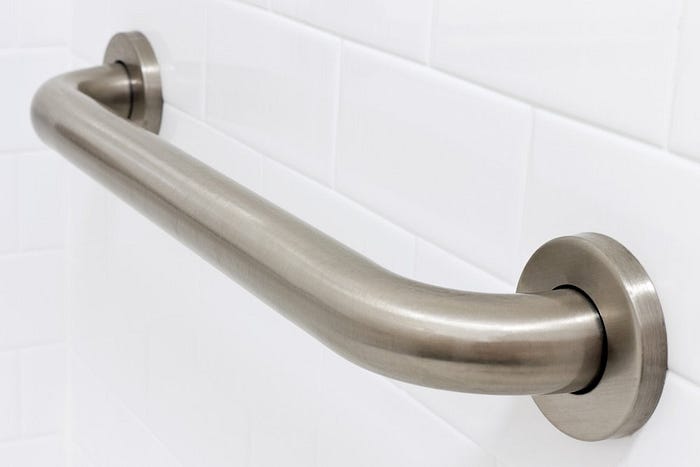
- Situate temporary grab bars in needed places — some of them suction to the wall!
Entrances and Exits
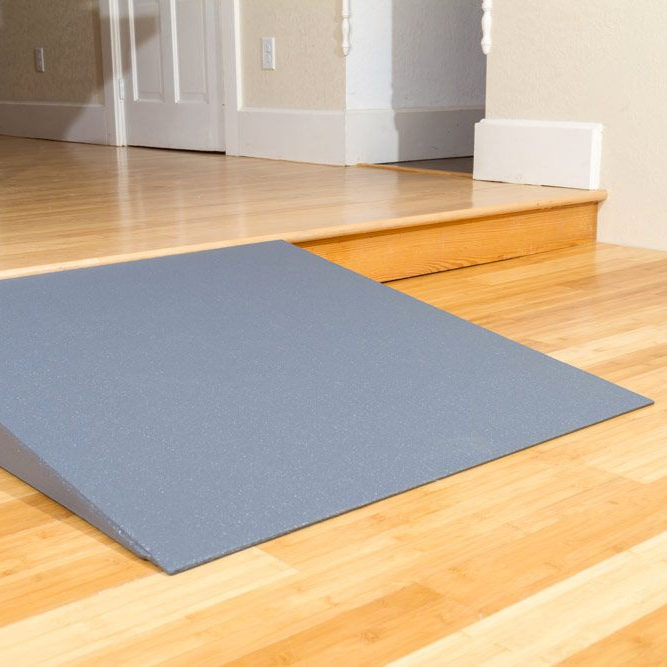
Getting in and out of the home probably stuck out as a sudden challenge when the person with MS had their first bout with mobility issues. You may wonder if a quick fix for this exists — and it does! Temporary ramps can provide greater ease after a short installation, helping the resident feel free to come and go as they please.
Small threshold differences, often at doorways or transitioning points in the house, might also seem like larger stumbling blocks in light of MS symptoms. But diminutive threshold ramps can smooth out contrasting floor heights between rooms.
Adjust Your Furnishings
As we mentioned, one major key to MS interior design is clear space. People with MS need obstruction-free walking paths to minimize trip hazards, a high MS safety consideration.
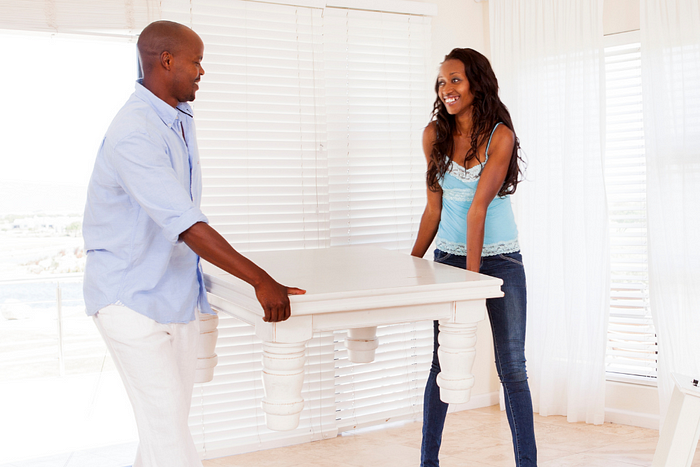
In some homes, this can be accomplished in a day or two with simple rearranging. Friends, family, or caregivers can be called on to help move around couches, chairs, desks, and tables until you’ve achieved a clear flow. In other homes, this may take more involved efforts.
Invest in Products for Multiple Sclerosis
Many products and devices exist on the market to support energy conservation and accessibility. Equip yourself with these essentials to ease everyday tasks:
- Reacher/grabber tools — an arm extension for times when you’re dealing with limb stiffness, fatigue, or need to remain seated.
- Foot-lifter straps — these can give you that extra boost you need to get in and out of bed.
- Crockpot or pressure cooker — simplify food preparation to keep some control over how you cook and eat.
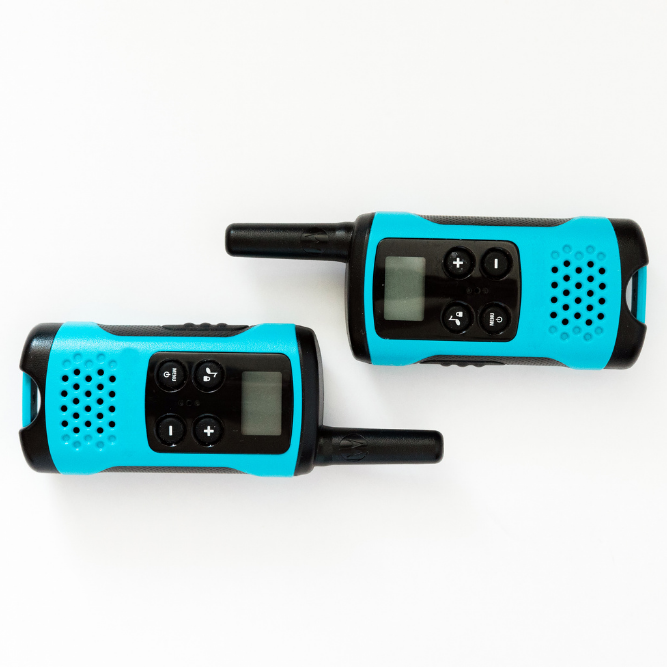
- Tablet monitors or walkie talkies — communicate with other people in the house without having to change location or raise your voice.
Lighting
Controlling the light in the environment can affect anyone’s mood and mental clarity. The extra support of quality lighting can really benefit somebody with MS, who might struggle with cognitive issues and depression. Bright, full-spectrum light can help combat confusion, depression, and fall risk all at once. Install smart bulbs so that you can control them with your voice when you need to conserve energy.
Long-Term Home Renovations for Multiple Sclerosis
When you are ready, you may want to consult a designer who specializes in universal design or design for those living with chronic conditions. And you’ll want to hire a contractor who’s willing to listen in the process of making more major changes to your home.
It’ll be worth it for the quality of life that proper accommodation provides.
General Home Recommendations
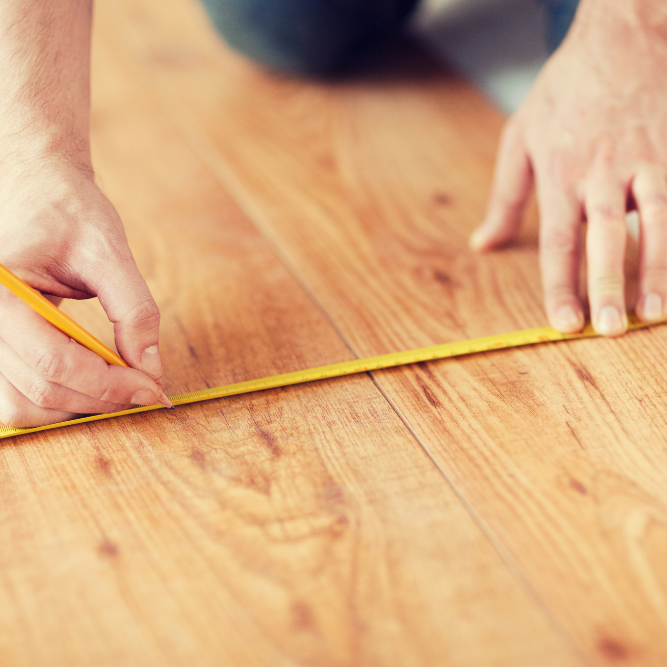
Certain wide-scale renovations make sense in most parts of the house:
- Create visual contrast in flooring to meet visual impairment needs. This could mean adding a border to designate where the wall meets the floor or demarcating a clear walking path that’s a different color. These strategies can be employed on carpet, tile, or wood flooring. Note: for many people, walking on carpet takes more energy because of friction. Or the use of a motorized scooter on carpet can prove difficult. So consider new wood, vinyl, or tile flooring.
- Ramps, stair lifts, vertical platform lifts, or elevators to deal with steps in the way that’s most appropriate for each entry/exit location. Occasionally, low-rise steps may provide a better solution than a ramp.
- Widening doorways. In order to make room for equipment like walkers or wheelchairs, it’s easiest to widen doorways to at least 32 if not 36 inches. If an existing doorway is almost wide enough, you can often use an offset hinge instead.
Bathroom Remodeling for MS
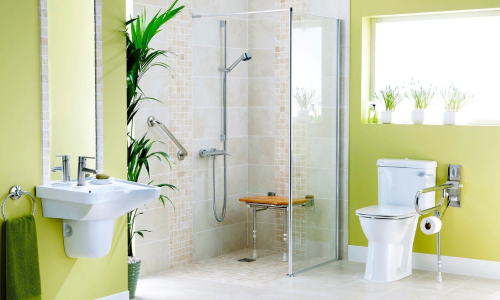
The bathroom often creates challenges for anyone with mobility issues, people with MS included.
It may be worth investing in MS home modifications for this room more than others. By sticking with universal design principles, the upgrades will help maintain market value for your home:
- Change the height of your sink for easy access while sitting.
- Also raise the height of your toilet by adding one designed for comfort-height .
- Install grab bars in this slipperiest of rooms — as always, we recommend going with a type that you find stylish.
- Widen the bathroom door or change the door type to another user-friendly style — sliding or pocket.
- Modify towel rods, hooks, counters, and cabinetry into the “easy-to-reach” height zone.
Consider how to address your bathtub or shower: is it best to install a roll-in or zero-entry shower or walk-in tub? Can you still get into the shower, but a shower chair would help reduce fatigue? Keep in mind that an easily accessible bathtub may come in handy for a relaxing soak in cool water to alleviate nerve pain.
The bathroom is a great place to employ biophilic design. This essentially means “bringing the outside in”. You could choose natural materials like a stone tile or wood accents. A frosted window preserves privacy while letting in natural night. Certain indoor houseplants really thrive in the bathroom, too. All these allusions to nature create a calm space that supports pain management and cognitive relief, too.
Keep in mind that biophilic design can be applied to all rooms in the house! We like to lean on it for a mental health boost in home design.
Kitchen Remodeling for Multiple Sclerosis
The main challenges in the kitchen are fatigue, temperature sensitivity, and motor strength and coordination.
Try some of these MS home modifications to maintain independence in preparing your meals:
- Installing an induction stove — keeps kitchen temperatures down, since they heat with magnetism rather than gas or electric coils.
- Invest in a large toaster oven or microwave to cook food — also less heat for MS temperature sensitivity.
- Two-tiered countertop — or, alternatively, a two-tiered kitchen island — so that you can sit while preparing and eating foods.
Bedroom Modifications for Multiple Sclerosis
In order to address mobility and fatigue challenges, you might consider moving your bedroom to the first floor if it’s not already there. Within your bedroom, consider some of these MS home modifications:
- Install clear, motion-activated lighting to reduce your fall risk when entering and attending to your daily wardrobe changes.
- Lower or raise bed height to make for an easy transfer- there is an optimum height!
- Add a safety ring or other slide rail to bed — be attentive to material and color to maintain unity of style and harmony in this most personal of spaces.
- Replace closet doors with a curtain — takes less energy to access storage there.
- Organize items in closets so the most-used items are easily accessible.
- Rearrange closet bars and shelves to lower heights, or add drawers — again, give yourself the option to sit whenever possible.
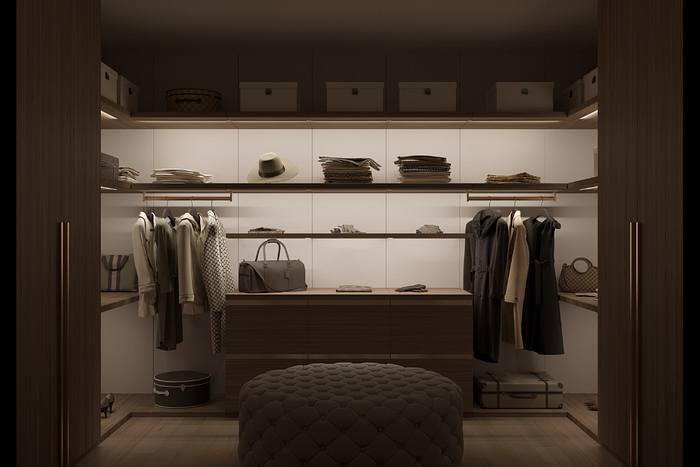
And keep in mind the mental health benefits of a well-designed space that you really love. Use paint colors, textures, and fabrics that feel uplifting and comfortable for you. Although the bedroom is an especially personal place to incorporate preferences, this goes for all the rooms in the house where possible.
Smart Technology for MS
Don’t underestimate the value of a wi-fi thermostat or an Alexa that can communicate with your house regulating systems. These will help you manage temperature sensitivity and conserve your energy.
Automation can expand from there into many realms of the home. Smart appliances and automated doors increase ease and energy conservation in daily life at home.
Similar surveillance technology can be installed in the home to help intervene for fall risks. Motion sensors throughout the house can actually detect when a person’s balance or gait changes, alerting both the person with MS and nearby caretakers.
Wearable fall prevention devices perform a similar function; as expected, they are smaller and worn on the person’s body. These open us to the realm of assistive technology products, useful counterparts to accessible home design.
To support cognitive changes over time, install, set up, or wear smart devices, like smart calendars with date/time displays and built-in reminders or scheduled medication prompts.
Make Space for the Caregivers in Home Design
If you know someone with MS, you probably know their caregiver, as well. Asking for help when you live with a chronic condition is more than okay — it’s normal.
Family, friends, and professional assistants often play an essential role in the daily, weekly, or otherwise routine life of somebody with MS. Helping care partners maintain wellness helps the person living with MS just as much. We design spaces for caregivers as part of our holistic perspective.
Just like we approach design for the primary resident, we consider the needs of the care partner. For instance, if they often work overnight, you could allocate a room near the master bedroom: murphy bed, half-bath, and kitchenette. There, they can rest and take meals, but still be able to respond quickly if needed.
You can also incorporate organized cabinets, drawers, or work tables within the bathroom and kitchen designs — this helps reduce caretaker fatigue, too.
Home Modifications for MS: Within Reach
You don’t need to create your plan alone. We are CAPS-certified home designers who offer solutions for people living with chronic conditions. Contact us today to start with a conversation.


Leave a Reply